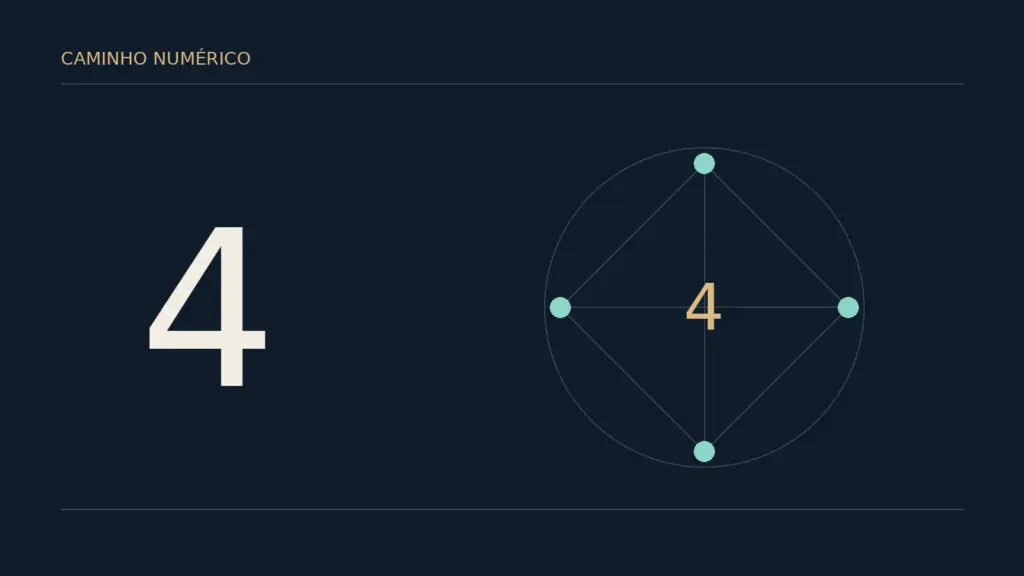
Number 4 in numerology is associated with organisation and constancy. This is an interpretation of a symbolic tradition, not a scientific assessment of personality nor a prediction. You can use the theme to formulate questions about your experience, without assuming that a result defines who you are.
What 4 means as a theme for reflection
4 usually represents organisation, continuity and attention to what sustains a task. A study routine, a calendar of commitments or a tidy space can serve to explore this image. The point is not to have everything perfect, but to understand what structure helps you do what you need.
A difficulty associated with the same theme is rigidity. A rule can be useful one day and create unnecessary work the next. Revising a plan in the face of an unforeseen event is not a lack of discipline. Use this interpretation to distinguish what must be fulfilled from what can be adapted, without turning order into a permanent obligation.
How to calculate: examples that arrive at 4
Before interpreting, identify the field you are calculating. The full date, the letters of the name, the day of the month and the calendar year are not interchangeable data. The same digit can appear in several calculations without turning those fields into a single reading.
Reduction of a total
Simple reduction adds the digits. These two examples show only the operation, without attributing a date or a person to them:
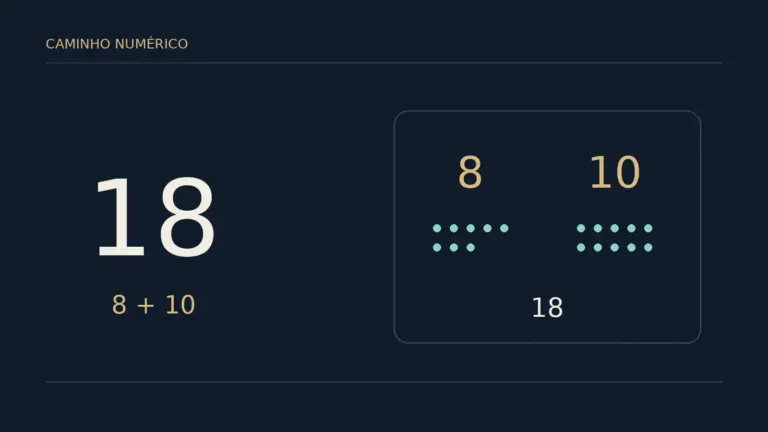
- 13/4: 1 + 3 = 4
- 31/4: 3 + 1 = 4
Life path
In this site’s method, you reduce day, month and year separately, preserving 11, 22 and 33 at each stage; then you add and reduce again, with the same rule. For the fictitious date 1 of January of 2000, the day becomes 1, the month becomes 1 and the year reduces to 2. The sum is 1 + 1 + 2 = 4. Here, the life path is 4. Check the sequence in the life path calculator.
Expression number
The name uses the A to Z table in cycles of 1 to 9: A is worth 1, I is worth 9, J returns to 1 and Z is worth 8. In the didactic example PEDRO, the calculation is P(7) + E(5) + D(4) + R(9) + O(6) = 31; the sum of the digits gives 4. This is only a fictitious first name. To calculate the expression number of the chart, follow the full name convention indicated in the expression number guide.
Personal year
The calculator uses January to December. Reduce the day, the month and the chosen year to a single digit each; add the three and keep 11 only if that sum is exactly 11. In the remaining cases, reduce to a single digit. For someone born on 2 of January, in 2026: 2 + 1 + 1 = 4. The last 1 comes from 2 + 0 + 2 + 6 = 10, then 1 + 0 = 1. Consult the personal year to compare other examples.
How to distinguish the fields in your chart
| Field | Data | What to record |
|---|---|---|
| Life path | Full date | Stages and result |
| Expression | All letters of the name | Table and total before reducing |
| Day of birth | Day of the month | Original day and chosen reduction |
| Personal year | Day, month and chosen calendar year | Year to which the calculation refers |
Keep the fields separate. The day number can be presented as original value and simple reduction; identify that convention. In the name, 11, 22 and 33 interrupt the reduction when they appear. Therefore, a result 22 is not presented as a simple 4, nor 33 as a simple 6. If you compare calculators, check first the order of operations and the master rule.
4 and the other numbers
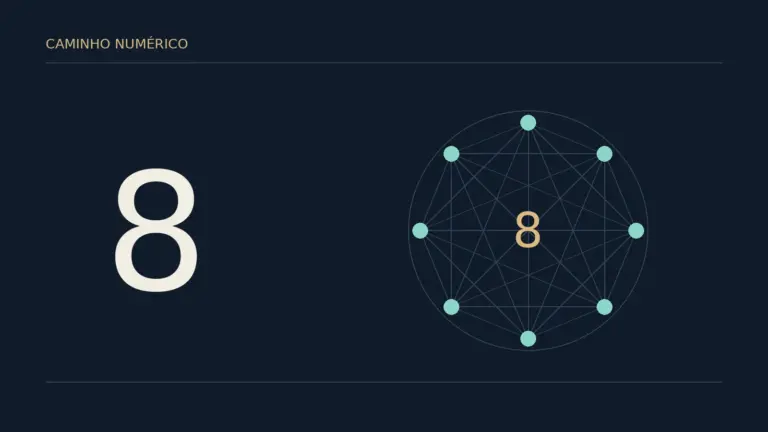
4 and 8 can seem close because both are associated with practical matters. The focus of 4 is on method and continuity; that of 8, on resource management and responsibilities. 5 already introduces the question of trying another way of doing things. These themes can coexist in the same task: organising a process, distributing resources and testing a change.
A situation to explore the theme
Imagine a person who made a to-do list for the week. A breakdown takes up part of a day, but they try to fulfil the original plan at the same speed. The theme of 4 can serve to ask which commitments are essential and which can move to another day. Keeping the list without looking at the real conditions does not make the work better organised.
An optional and concrete exercise
Choose a concrete task, such as tidying a drawer or preparing materials for study. Define what counts as finished and a stopping moment. Do only what is necessary to reach that criterion. At the end, observe whether the organisation facilitated the next step or whether you created new obligations. Leave room for rest and for unforeseen events: a routine serves you when it fits your life, not when it occupies all the available time.
Record what you observed and a situation where the interpretation did not fit. An example that seems to confirm the theme does not prove that the number caused it. You can also repeat the exercise without calculating anything: the utility lies in the question and what you do with it, not in a demonstrated property of the digit.
Frequently asked questions
Is a 22 result equal to 4?
The simple reduction of 22 is 4, but the name calculator preserves 22 as a master number. You can record 22/4 to study the two notations, always identifying the rule used.
Does the same number in the name and in the date mean the same thing?
No. The data and the field of interpretation are different. name numerology uses letters; the life path uses the full date. Do not add the results to create a new field without an explicit rule.
Does seeing the number repeated confirm this interpretation?
No. Finding a digit in times, prices or number plates does not demonstrate an external message. If you want to study the symbolism, distinguish the pattern you observed from the explanation you are attributing to it.
Caminho Numérico
Keep exploring numerology
Get new articles on numerology, tarot and astrology to explore the ideas in this article further.