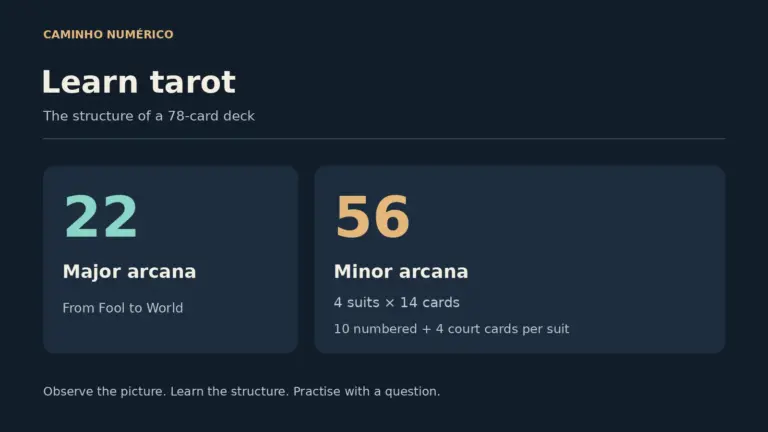
When most people think of tarot, their minds jump to the dramatic cards — Death, The Tower, The Fool. Those are the Major Arcana, the 22 cards that always steal the spotlight. But there are 56 other cards in the deck that, honestly, are where the real everyday magic happens. We’re talking about the minor arcana.
If the Major Arcana represent life’s grand karmic lessons and transformative milestones, the minor arcana deal with daily life — the decisions, emotions, practical challenges, and small victories that make up your actual reality. Without them, a tarot reading would be like watching a movie with only the epic moments, without understanding what led up to them.
In this guide, you’ll get to know each of the four suits, understand the role of court cards, and learn how to interpret the minor arcana in your readings. Ready? Let’s go.
What Are the Minor Arcana?
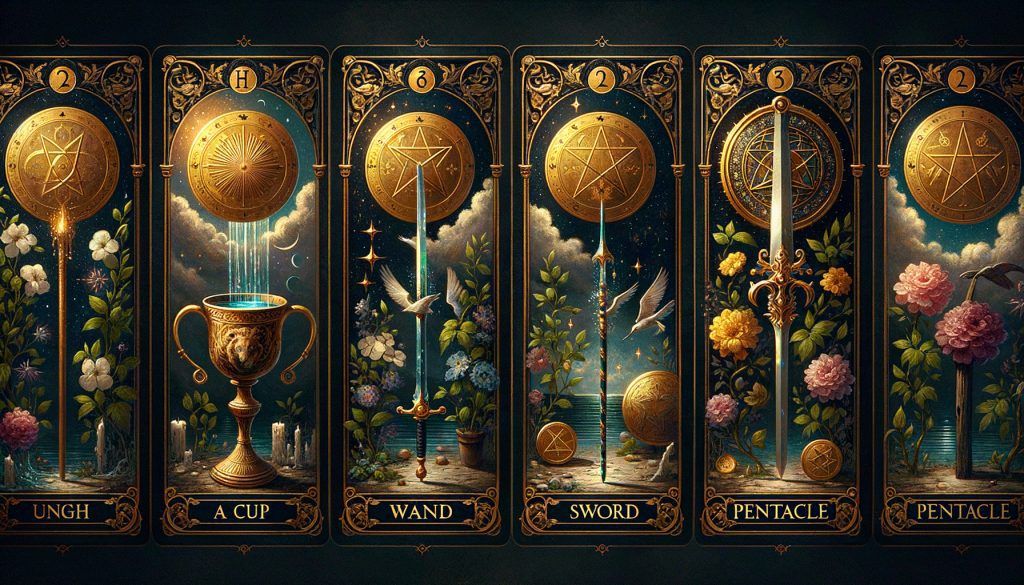
A standard tarot deck has 78 cards: 22 Major Arcana and 56 minor arcana. The latter are divided into four suits — Cups, Wands, Swords, and Pentacles (also called Coins) — each containing 14 cards: Ace through 10, plus four court cards (Page, Knight, Queen, and King).
You’ll notice the structure closely resembles a regular playing card deck. That’s no coincidence — modern playing cards historically descend from the tarot. The difference is that playing cards dropped the Knight, leaving us with Jack, Queen, and King.
Major Arcana vs. Minor Arcana: What’s the Difference?
Think of it this way:
- Major Arcana = the chapters of your life’s book. They represent deep themes, spiritual lessons, and turning points that leave a lasting mark.
- Minor Arcana = the paragraphs within each chapter. They cover concrete situations, passing emotions, and everyday choices that, together, build your story.
A spread full of Major Arcana suggests you’re going through a phase of profound transformation. A spread dominated by minor arcana means you have more control over the situation — these are things you can directly influence through your actions.
The 4 Suits of the Minor Arcana
Each suit corresponds to an element, an area of life, and a type of energy. Understanding these associations is half the battle when interpreting any minor card.
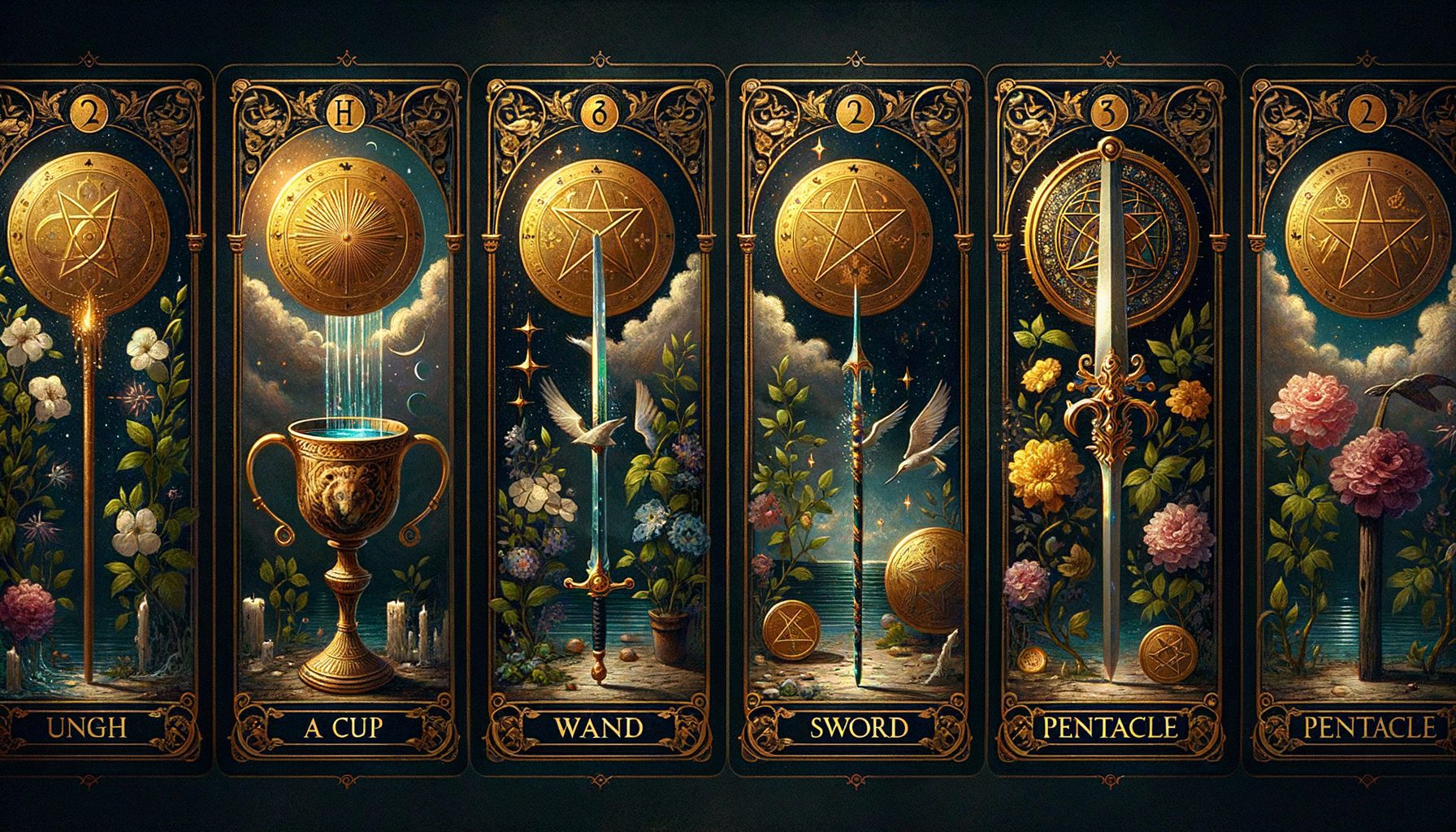
🏆 Suit of Cups — Emotions and Relationships
Element: Water
Domain: Feelings, love, relationships, intuition, creativity
Season: Summer
Cups are the suit of the heart. When they show up in a reading, they’re speaking about emotions — whether that’s joy, love, grief, or disappointment. These are the cards that appear when the question involves romantic relationships, friendships, or your inner emotional world.
The Ace of Cups is one of the most beautiful cards in the deck — it represents the beginning of a new feeling, that flutter in your stomach from a new romance or a friendship that appears out of nowhere. The 10 of Cups, on the other hand, is full emotional fulfillment: family, harmony, the classic “happily ever after.”
But it’s not all sunshine. The 3 of Cups reversed can point to jealousy or betrayal, while the 5 of Cups shows grief over something lost — even when there are still good things in your life you’re choosing not to see.
Interpretation tip: When many Cups appear, the situation is emotionally charged. Ask yourself: am I letting feelings drive me too much? Or, on the contrary, have I been suppressing them?
🔥 Suit of Wands — Action and Passion
Element: Fire
Domain: Ambition, career, creativity, energy, adventure
Season: Spring
Wands are pure energy. This suit speaks of drive, motivation, projects, and that burning desire to make things happen. If Cups feel, Wands do.
The Ace of Wands is a bolt of inspiration — a new idea, a project that excites you, the spark of something with enormous potential. The 3 of Wands shows the early results of your work and expansion into new horizons. And the 10 of Wands? That’s the weight of excess — too many responsibilities, burnout, a sign that you need to delegate or let something go.
Wands also connect to sexuality and physical passion. In a relationship reading, they can indicate intense attraction, desire, or a very dynamic energy between people.
Interpretation tip: Too many Wands in a spread? Watch out for impulsiveness. Lack of Wands? You might be running low on motivation or procrastinating on something important.
⚔️ Suit of Swords — Mind and Conflict
Element: Air
Domain: Thought, communication, truth, conflict, decisions
Season: Autumn
Swords cut — and sometimes it hurts. This is the mental suit, connected to intellect, communication, and, unfortunately, also to conflict and pain. It’s no accident that many of the most “frightening” tarot cards belong to this suit (hello, 10 of Swords).
But don’t run from Swords. The Ace of Swords represents a moment of absolute mental clarity — a “eureka” or a truth that finally reveals itself. The 6 of Swords shows the transition to calmer waters after a difficult phase. And the Queen of Swords? She’s unfiltered honesty, the ability to see things as they truly are.
The harder side? The 3 of Swords (emotional pain, heartbreak), the 9 of Swords (anxiety, insomnia, thoughts that won’t leave you alone), and the 10 of Swords (end of a cycle, total exhaustion — but with the promise of a fresh start).
Interpretation tip: Lots of Swords in a reading indicate mental stress, conflicts, or tough decisions. Ask: am I overthinking? Do I need to communicate something I’ve been avoiding?
💰 Suit of Pentacles (Coins) — Material World and Security
Element: Earth
Domain: Money, work, health, home, material possessions
Season: Winter
Pentacles — or Coins, depending on the deck — are the most grounded suit. They speak about money, yes, but also about health, body, career, and everything tangible and concrete in your life.
The Ace of Pentacles is a material opportunity — a new job, an investment, a financial improvement. The 9 of Pentacles is the card of independence and comfort earned through your own effort (picture someone enjoying their garden, surrounded by abundance). The 10 of Pentacles represents generational wealth, legacy, and family stability.
On the opposite end, the 5 of Pentacles speaks of financial hardship, exclusion, or feeling left out in the cold. And the 4 of Pentacles? That’s holding onto what you have for dear life — fear of loss, stinginess, or resistance to change.
Interpretation tip: A spread heavy on Pentacles centres on the material world. The question likely involves money, work, or physical security. Few Pentacles? You might be neglecting the practical side of life.
Quick Reference — Suits at a Glance
| Suit | Element | Life Area | Energy | Season |
|---|---|---|---|---|
| 🏆 Cups | Water | Emotions, love, relationships | Receptive, intuitive | Summer |
| 🔥 Wands | Fire | Action, passion, career | Expansive, creative | Spring |
| ⚔️ Swords | Air | Mind, communication, truth | Analytical, cutting | Autumn |
| 💰 Pentacles | Earth | Money, health, material | Stable, practical | Winter |
The Court Cards: Page, Knight, Queen, and King
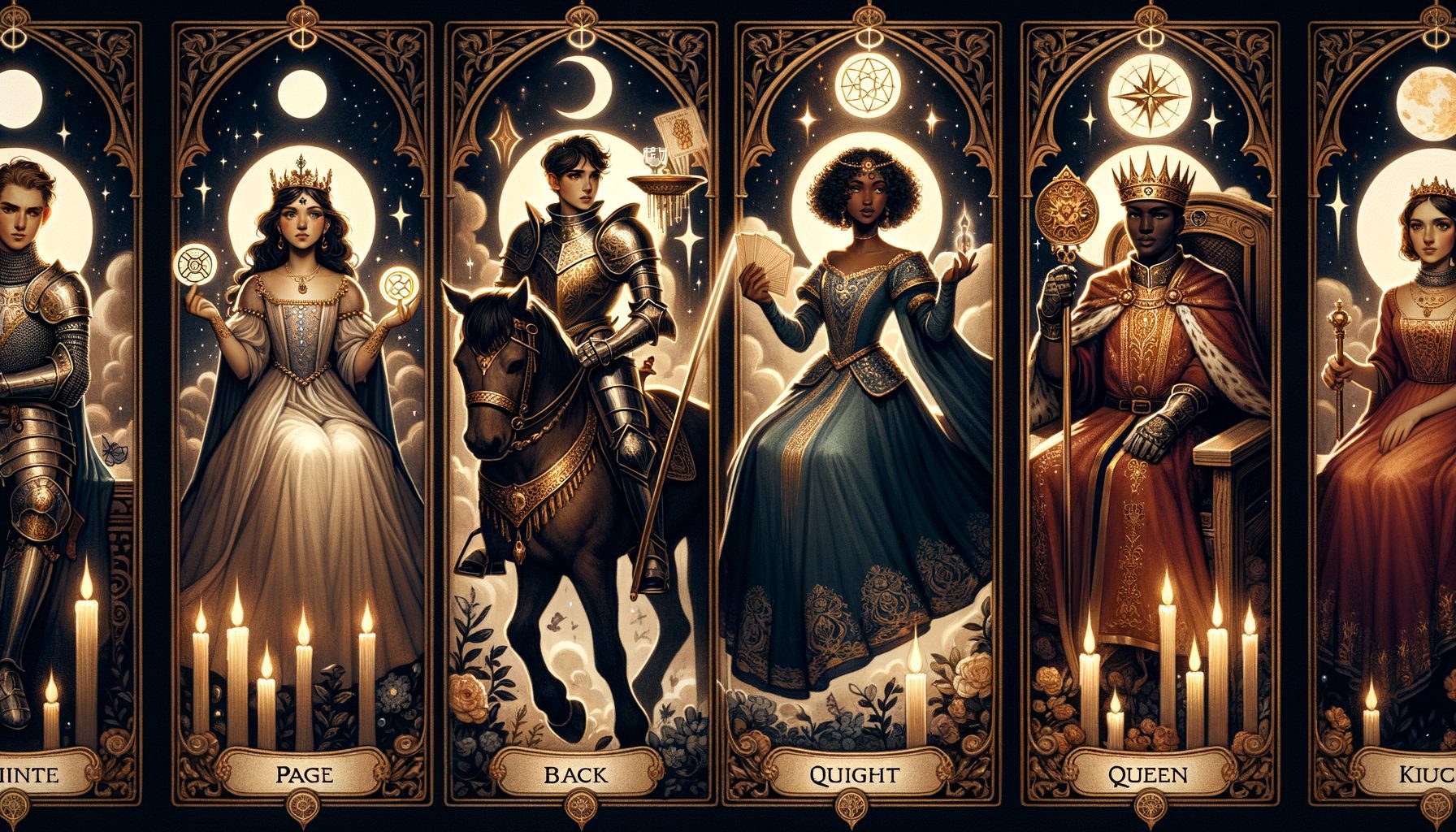
Court cards are, without question, the trickiest to interpret for beginners. They can represent real people in your life, aspects of yourself, or energies and attitudes at play in a situation. Sometimes they’re all three at once.
Each suit has four court cards, giving us a total of 16 distinct personalities in the deck. Let’s look at each rank:
The Page
The Page is the student, the messenger, the beginning of a journey. They represent youth (not necessarily in age — it can be someone young at heart), curiosity, and undeveloped potential. When a Page appears, it often brings a message or news related to its suit.
- Page of Cups — A declaration of love, emotional news, artistic sensitivity
- Page of Wands — A new idea, enthusiasm for a project, adventurous spirit
- Page of Swords — Intellectual curiosity, vigilance, news requiring caution
- Page of Pentacles — Learning opportunity, start of a career path, dedication
The Knight
The Knight is action in motion. If the Page dreams, the Knight acts — sometimes recklessly. These cards bring energy, speed, and change. They frequently represent someone entering or leaving your life, or a period of intense activity.
- Knight of Cups — The romantic, sentimental proposals, following the heart
- Knight of Wands — Adventure, travel, pursuing a passion with everything you’ve got
- Knight of Swords — Haste, aggressive ambition, truths spoken without tact
- Knight of Pentacles — Methodical work, patience, slow but steady progress
The Queen
The Queen commands her element intuitively and receptively. She represents emotional maturity, nurturing energy, and inner mastery. She may point to a woman in your life or the more receptive, empathetic side of yourself, regardless of gender.
- Queen of Cups — Deep compassion, empathy, powerful intuition
- Queen of Wands — Confidence, magnetism, inspiring leadership
- Queen of Swords — Direct honesty, independence, clarity of thought
- Queen of Pentacles — Practical generosity, abundance, creating a safe home
The King
The King is the complete mastery of his element. He represents authority, experience, and control. He may be a powerful figure in your life or your own ability to command a domain. It’s leadership through action and accumulated wisdom.
- King of Cups — Emotional balance, diplomacy, generosity of spirit
- King of Wands — Vision, entrepreneurship, natural-born leader
- King of Swords — Intellectual authority, justice, rational decisions
- King of Pentacles — Material success, management, hard-earned abundance
The Numbers in the Minor Arcana: Ace Through 10
Beyond the suit, each card’s number tells a story. There’s a progression — a kind of journey within each suit, from the beginning (Ace) to the conclusion (10). Once you know the general meaning of each number, you can interpret cards you’ve never encountered before:
- Ace — Beginning, pure potential, seed. A new opportunity.
- 2 — Duality, choice, partnership. Balance or dilemma.
- 3 — Growth, collaboration, expression. The first fruits.
- 4 — Stability, structure, foundation. Can mean security or stagnation.
- 5 — Conflict, challenge, change. The tension point.
- 6 — Harmony, recovered balance, generosity. Moving past a phase.
- 7 — Reflection, strategy, test. A moment of inner evaluation.
- 8 — Movement, power, mastery. Acceleration or restriction.
- 9 — Near-completion, personal fulfilment, solitude. The penultimate step.
- 10 — Completion, end of cycle, fullness. The lesson is complete.
Combine the number’s meaning with the suit and you’ve got a solid reading. The 5 of Cups? Conflict (5) + emotions (Cups) = emotional pain, loss in matters of the heart. The 9 of Pentacles? Fulfilment (9) + material (Pentacles) = financial independence, personal achievement. It really is that straightforward.
How to Interpret the Minor Arcana in a Reading
Now that you know the suits, the numbers, and the court cards, here’s the final piece: how does all of this work together in practice?
1. Observe the Dominant Suit
Before looking at individual cards, notice which suit appears most. If your spread has four Swords and one Cup, the central theme is mental — thoughts, decisions, possibly conflict. This gives you the overall “tone” of the reading.
2. Read the Numerical Progression
Seeing low numbers (Ace to 3) means you’re at the start of something. Middle numbers (4 to 6) indicate the situation is developing. High numbers (7 to 10) suggest you’re near the end of a cycle or reaping the results of past actions.
3. Identify the Court Cards
Ask yourself: does this card represent someone I know? Or an aspect of myself that I need to activate (or tone down)? A Queen of Swords in an advice position might be saying: “be honest and direct, even if it’s uncomfortable.”
4. Pay Attention to Reversed Cards
If you use reversed cards (not everyone does, and that’s perfectly fine), they generally indicate the suit’s energy being blocked, delayed, or turned inward. A reversed Ace of Wands might mean an idea that isn’t ready to move forward yet, or motivation that’s running dry.
5. Relate to Position in the Spread
A card’s meaning shifts depending on where it lands. The 10 of Swords in the “past” position is completely different from the same card in the “future” position. In the past, it shows something you’ve already overcome. In the future, it warns that a difficult cycle may be approaching — but also that it will bring renewal.
Why the Minor Arcana Matter So Much
Some people read with only the Major Arcana. That works — for broad, spiritual questions. But if you want a reading that speaks to your real life, with detail and nuance, you need the minor arcana.
They’re the ones that tell you how you’re living an experience, not just what experience you’re having. They reveal whether the issue is emotional (Cups), practical (Pentacles), mental (Swords), or energetic (Wands). And they show you the small, concrete actions you can take to shift the direction of things.
Next time you pull a “minor” card, don’t dismiss it. Look at it closely. Ask yourself: what is this suit telling me? What does this number mean at this stage of my life? If it’s a court card, who comes to mind?
The minor arcana aren’t “minor” in importance. They’re minor only in name. In practice, they’re the foundation of any complete tarot reading — and the better you know them, the deeper and more useful your readings will be.
Caminho Numérico
Keep exploring numerology
Get new articles on numerology, tarot and astrology to explore the ideas in this article further.