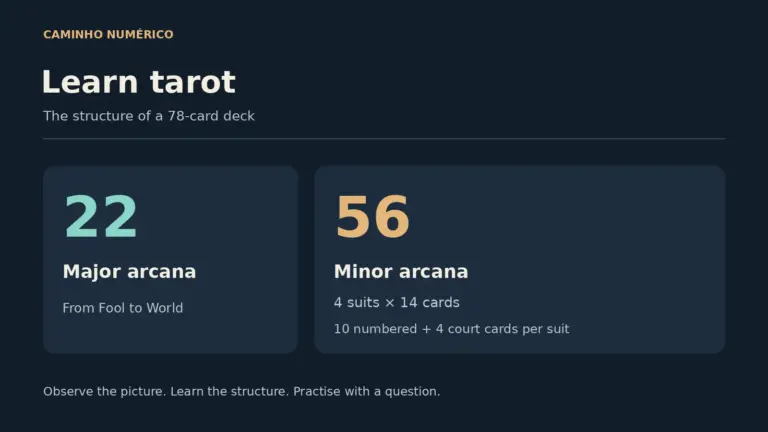
The Major Arcana are 22 tarot cards. In the Rider-Waite-Smith sequence, they run from The Fool (0) to The World (XXI, 21). That is why “22 arcana” indicates the number of cards, not the existence of a XXII card in that sequence. The list below follows that system and summarises symbolic meanings used in readings; they are not proven predictions.
What are the Major Arcana?
The Victoria and Albert Museum describes the tarot deck with 78 cards: 22 Major and 56 Minor. The history of the cards includes the game, before the more recent divinatory uses. Studying the images and the history of the deck helps to distinguish cultural conventions from claims about the future.
The word “arcanum” comes from the Latin arcanum, which means secret or mystery. The Major Arcana are 22 cards which, in the Rider-Waite-Smith sequence, are numbered from 0 to 21 and used to interpret symbolically themes of human experience: birth, death, love, power, transformation, wisdom.
While the Minor Arcana (the remaining 56 cards) deal with everyday situations, the Majors tend to be interpreted as overarching themes. This distinction belongs to reading conventions, it does not demonstrate forces acting upon the life of the querent.
The sequence of the 22 Arcana is often called “The Fool’s Journey” (The Fool’s Journey), because it begins with The Fool (card 0) and ends with The World (card 21). It is a reading metaphor, not a universal description of every person’s life.
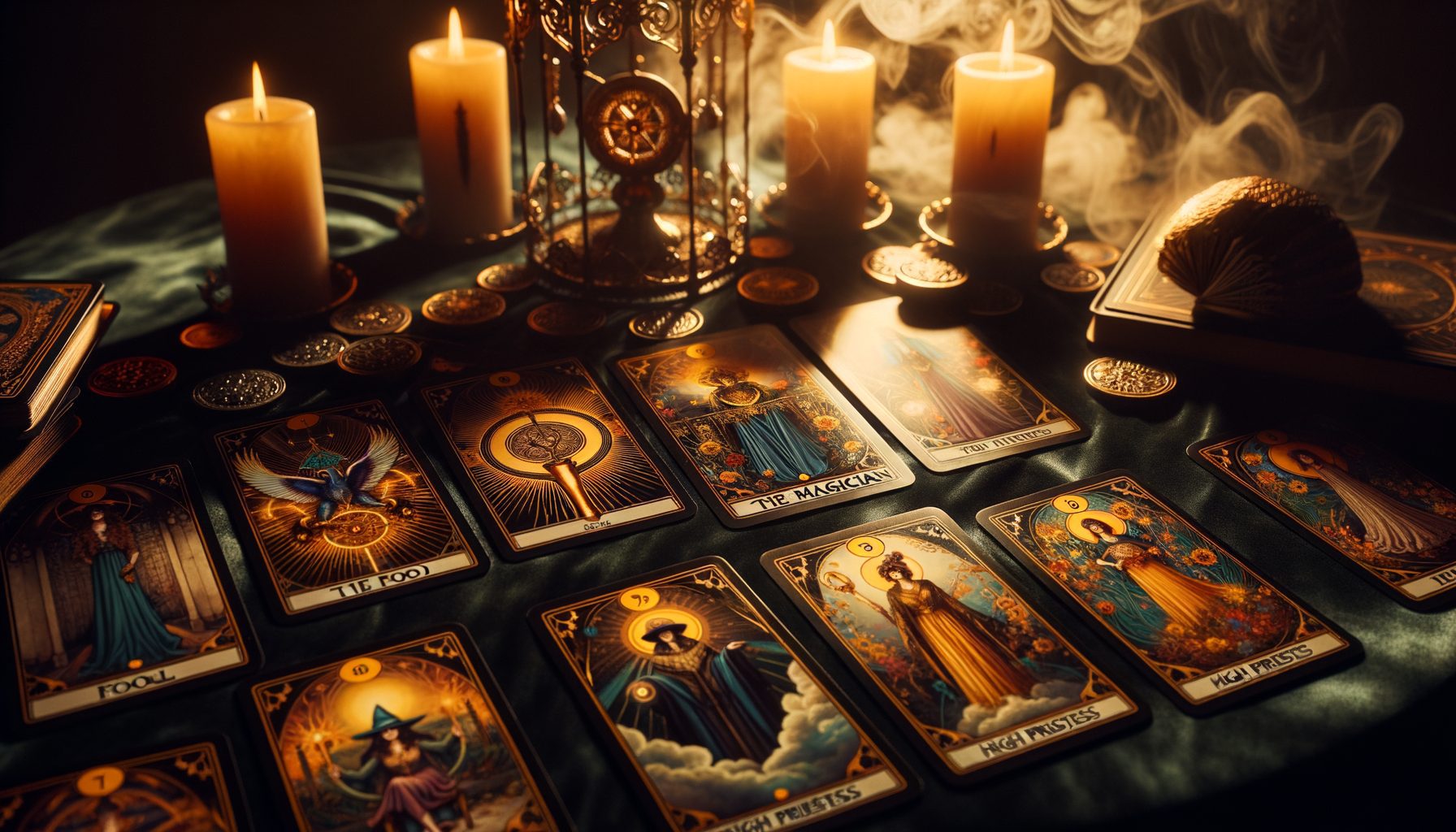
The 22 Major Arcana in order
| Number | Card |
|---|---|
| 0 | The Fool |
| 1 | The Magician |
| 2 | The High Priestess |
| 3 | The Empress |
| 4 | The Emperor |
| 5 | The Hierophant |
| 6 | The Lovers |
| 7 | The Chariot |
| 8 | Strength |
| 9 | The Hermit |
| 10 | Wheel of Fortune |
| 11 | Justice |
| 12 | The Hanged Man |
| 13 | Death |
| 14 | Temperance |
| 15 | The Devil |
| 16 | The Tower |
| 17 | The Star |
| 18 | The Moon |
| 19 | The Sun |
| 20 | Judgement |
| 21 | The World |
What is arcana 22?
In the numbering used here, there is no XXII: there are 22 cards because the count starts at zero. The World is XXI; The Fool is 0. If a calculation or deck presents “22”, consult the convention of that system before assigning a card. Do not confuse the number of cards with the printed number.
Why do Strength and Justice appear swapped?
In this guide, Strength is VIII and Justice is XI. Other decks use the reverse order. A. E. Waite explains the swap in The Pictorial Key to the Tarot, Strength chapter. Confirm the deck you are studying.
The 22 Cards and Their Meanings
0: The Fool (The Fool)
The Fool is the beginning of everything. It represents the leap of faith, innocence, unlimited potential. It is about to walk into the unknown: without fear, without baggage, with an almost naive trust in the universe.
In a reading: New beginnings, spontaneity, calculated risk. It can be an invitation to let go of control and trust the process. Reversed: Recklessness, hasty decisions, fear of risk.
I: The Magician (The Magician)
The Magician has all the elements at his disposal: fire, water, earth and air: and knows how to use them. He represents the ability to manifest, to turn intention into action. It is the “I can do it” card.
In a reading: Manifestation, skill, personal power, resources available. Reversed: Manipulation, wasted talents, illusion.
II: The High Priestess (The High Priestess)
The High Priestess sits between two pillars: the known and the unknown. She is the guardian of intuition, mysteries and hidden knowledge. Where the Magician acts, the High Priestess observes and feels.
In a reading: Intuition, inner wisdom, patience, mystery. Reversed: Hidden secrets, disconnection from intuition, withheld information.
III: The Empress (The Empress)
Abundance, fertility and creation. The Empress is the maternal energy of nature: everything she touches flourishes. She represents pleasure, sensuality and the capacity to nurture.
In a reading: Creativity flowing, abundance, projects and symbolic creation, connection with nature. Reversed: Creative block, dependency, personal neglect.
IV: The Emperor (The Emperor)
Structure, authority and stability. The Emperor builds empires: not with brute force, but with discipline and strategic vision. He is the complement to the Empress: a possible association is creation in one card and organisation in the other.
In a reading: Order, leadership, protection, structured ambition. Reversed: Rigidity, tyranny, excessive control.
V: The Hierophant (The Hierophant)
The Hierophant represents tradition, teaching and established belief systems. He can be a mentor, an institution or a conventional spiritual path. It is not always about religion: it is about following a system.
In a reading: Tradition, spiritual guidance, conformity, formal learning. Reversed: Rebellion, questioning authority, dogma.
VI: The Lovers (The Lovers)
Despite the name, this card is not always about romance. The Lovers speak of choices: especially those that define who we are. It is the card of union, harmony and alignment between values and actions.
In a reading: Love, harmony, important choices, alignment of values. Reversed: Disharmony, difficult choices, conflicting values.
VII: The Chariot (The Chariot)
Victory through willpower. The Chariot advances despite obstacles, driving opposing forces in the same direction. It is the card of determination and personal triumph.
In a reading: Determination, progress, control, victory. Reversed: Lack of direction, aggression, defeat.
VIII: Strength (Strength)
It is not physical strength: it is inner strength. The card typically shows a woman opening a lion’s mouth with gentleness, not violence. It represents quiet courage, patience and mastery of emotions.
In a reading: Inner courage, compassion, patience, self-control. Reversed: Insecurity, weakness, self-doubt.
IX: The Hermit (The Hermit)
The Hermit steps away from the noise to find his truth. With lantern in hand, he lights the way: but only his own. It is the card of introspection, chosen solitude and the wisdom that comes from within.
In a reading: Introspection, inner search, necessary solitude, internal guidance. Reversed: Excessive isolation, refusal to ask for help.
X: Wheel of Fortune (Wheel of Fortune)
Everything changes. The Wheel turns constantly: what is up goes down, what is down goes up. It is the card of cycles, fate and luck. It reminds us that nothing is permanent, neither the good nor the bad.
In a reading: Change, cycles, luck, turning point. Reversed: Bad luck, resistance to change, negative cycle.
XI: Justice (Justice)
Cause and consequence. The scales of Justice are used as a symbol of evaluation and responsibility. The card may serve to reflect on a decision, but it does not reveal the outcome of a legal process nor substitute information about facts and rights.
In a reading: Balance, truth, consequences, fair decision. Reversed: Injustice, dishonesty, lack of responsibility.
XII: The Hanged Man (The Hanged Man)
Paradoxically, the Hanged Man is not trapped: he is seeing the world from a different perspective. It is the card of the voluntary pause, the sacrifice that brings illumination and the surrender that liberates.
In a reading: New perspective, necessary pause, sacrifice, surrender. Reversed: Stagnation, resistance, useless sacrifice.
XIII: Death (Death)
In this symbolic reading, the card does not serve to predict a death. It represents the end of something and the beginning of something else. Radical transformation, closure of a cycle, rebirth. It is one of the most misinterpreted cards and, in truth, one of the most liberating.
In a reading: Transformation, end of a cycle, rebirth, inevitable change. Reversed: Resistance to change, fear of the unknown, stagnation.
XIV: Temperance (Temperance)
Balance, moderation and patience. Temperance mixes opposing elements with care: it is the art of finding the middle ground. After the intensity of Death, this card is associated with moderation and balance.
In a reading: Balance, patience, harmony, reconciliation. Reversed: Excess, impatience, imbalance.
XV: The Devil (The Devil)
Another misunderstood card. The Devil isn’t about “evil”: it’s about the chains we choose to wear. Addictions, destructive patterns, toxic relationships, materialism. The image of the chains can help reflect on dependencies and boundaries. Leaving an abusive or dependent situation may require support; it isn’t reduced to a simple choice nor resolved with a card.
In a reading: Addictions, negative patterns, materialism, shadow. Reversed: Liberation, breaking patterns, awareness.
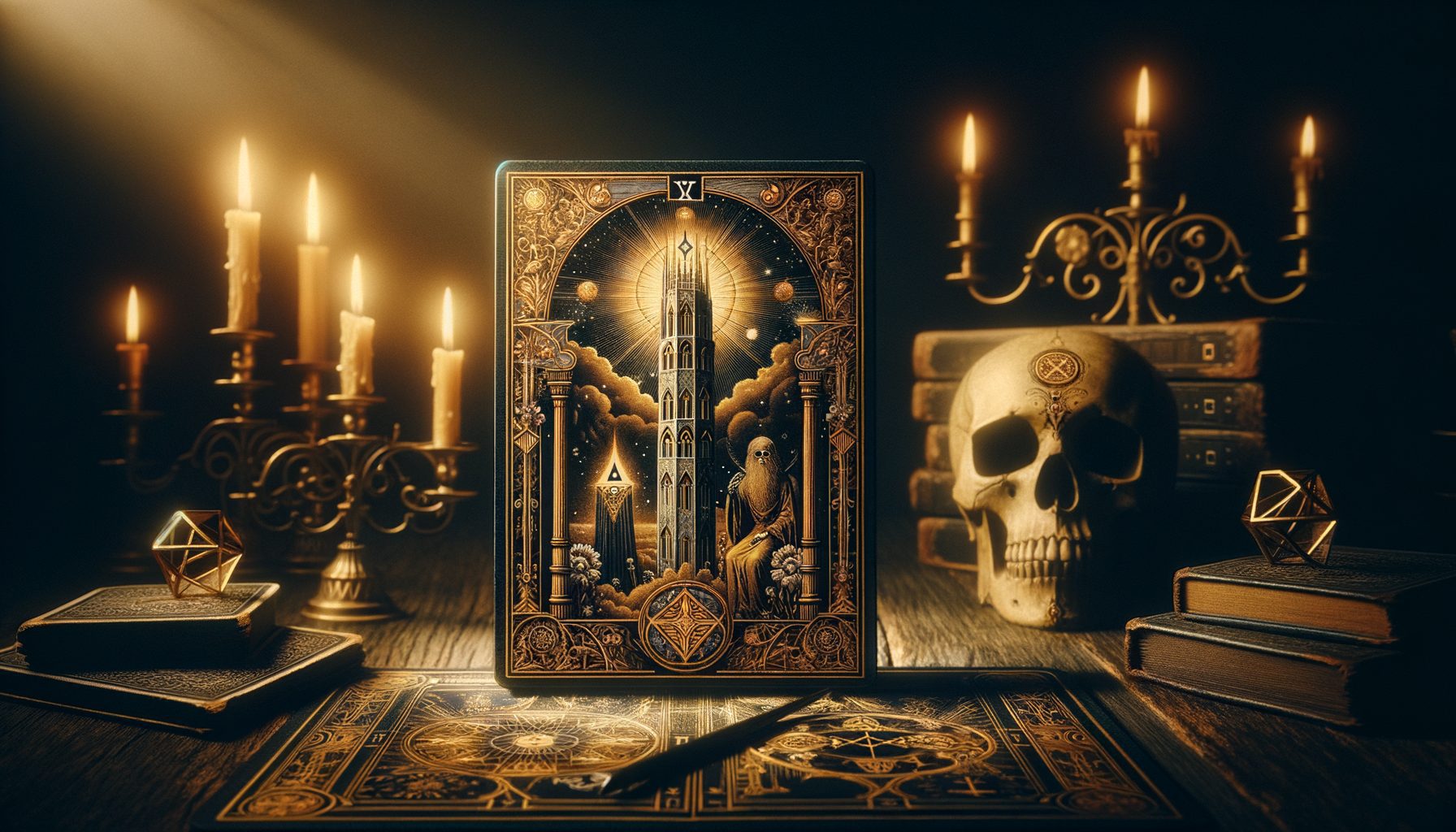
XVI: The Tower (The Tower)
Sudden destruction. The Tower falls, illusions crumble, and what wasn’t solid disappears. It’s uncomfortable, yes: but necessary. Only when false structures fall can we build something true.
In a reading: Crisis, revelation, abrupt change, destruction of the false. Reversed: Fear of change, disaster avoided, resistance.
XVII: The Star (The Star)
After the storm, hope. The Star is the most serene card in the deck: it’s associated with inspiration and hope. It can be read as an invitation to seek support and possibilities, without guaranteeing that a difficulty will end.
In a reading: Hope, inspiration, serenity, symbolic renewal. Reversed: Despair, lack of faith, disconnection.
XVIII: The Moon (The Moon)
The Moon illuminates, but also deceives. This card speaks of illusions, unconscious fears and the grey area where nothing is what it seems. It may indicate anxiety, confusion or the need to face inner shadows.
In a reading: Illusion, intuition, fears, unconscious. Reversed: Clarity arriving, release of fears, truth revealed.
XIX: The Sun (The Sun)
Pure joy, success and vitality. The Sun is one of the most positive cards in the deck: it brings clarity, confidence and an energy that warms everything around. In symbolic reading, it may invite recognition of positive aspects of a situation. It does not assure a favourable outcome.
In a reading: Joy, success, clarity, vitality, optimism. Reversed: Temporary joy, excessive optimism, ego.
XX: Judgement (Judgement)
A calling. Judgement asks you to look back, assess the path travelled and make a definitive decision. It’s the card of awakening, redemption and answering your highest purpose.
In a reading: Awakening, calling, assessment, spiritual rebirth. Reversed: Self-criticism, refusal of the calling, regret.
XXI: The World (The World)
The end of the journey: at least this one. The World represents completeness, integration and fulfilment. You did it. You learned. And now, with all that wisdom, you can begin a new cycle.
In a reading: Completeness, integration, success, fulfilment. Reversed: Sense of incompleteness, delays, lack of closure.
How to Use the Major Arcana in Readings
When a Major Arcana appears in a reading, pay attention. They are weighty cards: they can be read as important themes for the question you asked. The presence of a card does not prove that a force is acting in your life.
Some practical tips:
- Many Major Arcana in a reading: some readers give more attention to the overarching themes. The quantity of major cards alone does not confirm a transformation in your life.
- Few or none: some readers focus interpretation on practical situations. There is no rule that determines the real importance of the question by the number of major cards.
- Position matters: the same arcana changes meaning depending on its position in the spread (past, present, future, advice, etc.).
If you’re starting out, try simple spreads: one card a day, in the morning, asking “what energy accompanies me today?”. It’s a possible way to get to know the images and record your interpretation.
The Fool’s Journey: The Guiding Thread
If you read the 22 Major Arcana as a sequential story, you find a universal narrative:
The Fool (0) sets off on the adventure. He meets the Magician and the High Priestess (learning to act and to feel), the Empress and the Emperor (creating and structuring), the Hierophant (following traditions) and the Lovers (making choices). With the Chariot he advances, with Strength he learns self-mastery. The Hermit invites reflection before the Wheel changes everything.
In the second half, Justice demands responsibility, the Hanged Man asks for surrender, Death brings transformation. After the Tower, the Star can be read as hope, the Moon as uncertainty and the Sun as clarity. Judgement awakens and, finally, The World completes the cycle.
This chaining is a possible reading of the images. It does not require every person to go through the same stages nor does it predict events.
How to Compare Tarot and Numerology
Some readers bring the card numbers and numerologytogether. The Magician (1) shares the leadership energy of number 1. The High Priestess (2) vibrates with the duality and intuition of 2. The Empress (3) is the creativity of 3.
If you already know your expression number or life path, try looking for the corresponding Major Arcana. It can serve as an exercise in comparing symbols. Record the chosen method: correspondences vary and there is no single equivalence across all systems.
Example of a Reading Without Turning a Card into a Prediction
Imagine the question “What can I review before starting this project?” and the card The Hanged Man. A possible interpretation is to pause and look at the plan from another perspective. Translate that idea into a verifiable action: reread the objectives, ask for a second opinion or identify a missing piece of information.
That doesn’t mean the project is doomed nor that you should delay an urgent decision. The card is the starting point for a reflection chosen by you; the decision still depends on the facts. Note the question, the deck, the card and the proposed action. Later, compare the record with what happened, without treating any similarity as proof of prediction.
Frequently Asked Questions About the Major Arcana
How many major arcana are there?
A 78-card tarot deck has 22 major arcana and 56 minor arcana. The count of major cards differs from the printed numbering.
Is The Fool 0 or 22?
In the Rider-Waite-Smith, The Fool is 0. If another deck or method uses 22, read that system’s convention. In this list, The World is XXI and there is no XXII card.
Is Strength VIII or XI?
In this sequence, Strength is VIII and Justice is XI. In other decks, the order may be reversed. Confirm the numbers on your cards before studying the list.
Is it mandatory to read reversed cards?
No. There are methods that use reversed cards and others that read them always upright. Choose the rule before the spread and keep it in the record, rather than changing it to get a desired answer.
Do Death or The Tower announce an event?
A card does not prove a death, illness, accident or separation. In this guide, the images are interpreted as symbols of change and rupture. They are not for diagnosing, predicting risks or deciding on health, money or legal matters.
How to Continue Learning Tarot
Compare these 22 arcana with the 56 minor arcana and practise with the beginner’s tarot guide. When recording a spread, note the deck, the card position and the chosen interpretation. Do not use a card to diagnose pregnancy, illness or risk of death.
Caminho Numérico
Keep exploring numerology
Get new articles on numerology, tarot and astrology to explore the ideas in this article further.