What Exactly Is a Weekly Horoscope?
If you already check your daily horoscope, you’ve probably wondered whether it’s worth looking at the weekly one too. The short answer is yes — and here’s why.
A weekly horoscope is an astrological reading covering a seven-day period, typically Monday through Sunday. Unlike a daily horoscope, which focuses on the Moon’s fast-moving transits and the inner planets (Mercury and Venus), the weekly version captures more significant planetary movements. Aspects between planets that take several days to form and dissolve only make real sense when you look at the full week.
In practice, a good weekly horoscope works like a road map for the coming seven days. It tells you which days are most favourable for making decisions, when it’s better to step back and reflect, and which life areas — career, love, health, finances — will be most activated.
Daily, Weekly, or Monthly — What’s the Difference?
This is a fair question. Each type of horoscope has its place, and knowing when to use each one makes a real difference in how you engage with astrology day to day.
Daily horoscope
Focused on fast transits, especially the Moon’s. Since the Moon changes signs every two and a half days, daily predictions reflect fleeting emotional states and micro-trends. Useful for asking “what does today need from me?” but limited when it comes to strategic thinking.
Weekly horoscope
This is where aspects between slower planets come in — the Sun, Mercury, Venus, and Mars relative to Jupiter, Saturn, and their peers. A week is enough time for an aspect to form, peak, and begin to dissolve. That’s why the weekly horoscope gives you context: it reveals patterns that would go unnoticed in a day-by-day reading.
Monthly horoscope
Covers larger cycles — full moons, new moons, sign changes for planets like Venus and Mars. Great for medium-term planning, but too broad for day-to-day decisions.
The key is using all three together. The monthly gives you the general framework, the weekly points to specific trends, and the daily helps you fine-tune decisions in the moment.
Planetary Transits: The Engine Behind Your Weekly Horoscope
Every weekly horoscope rests on one thing: planetary transits. But what are they, exactly?
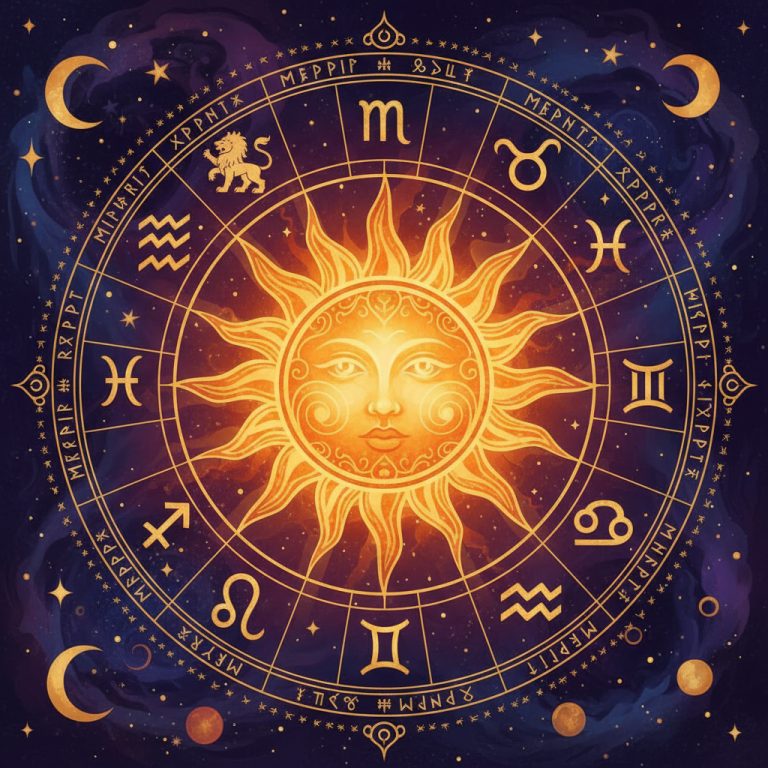
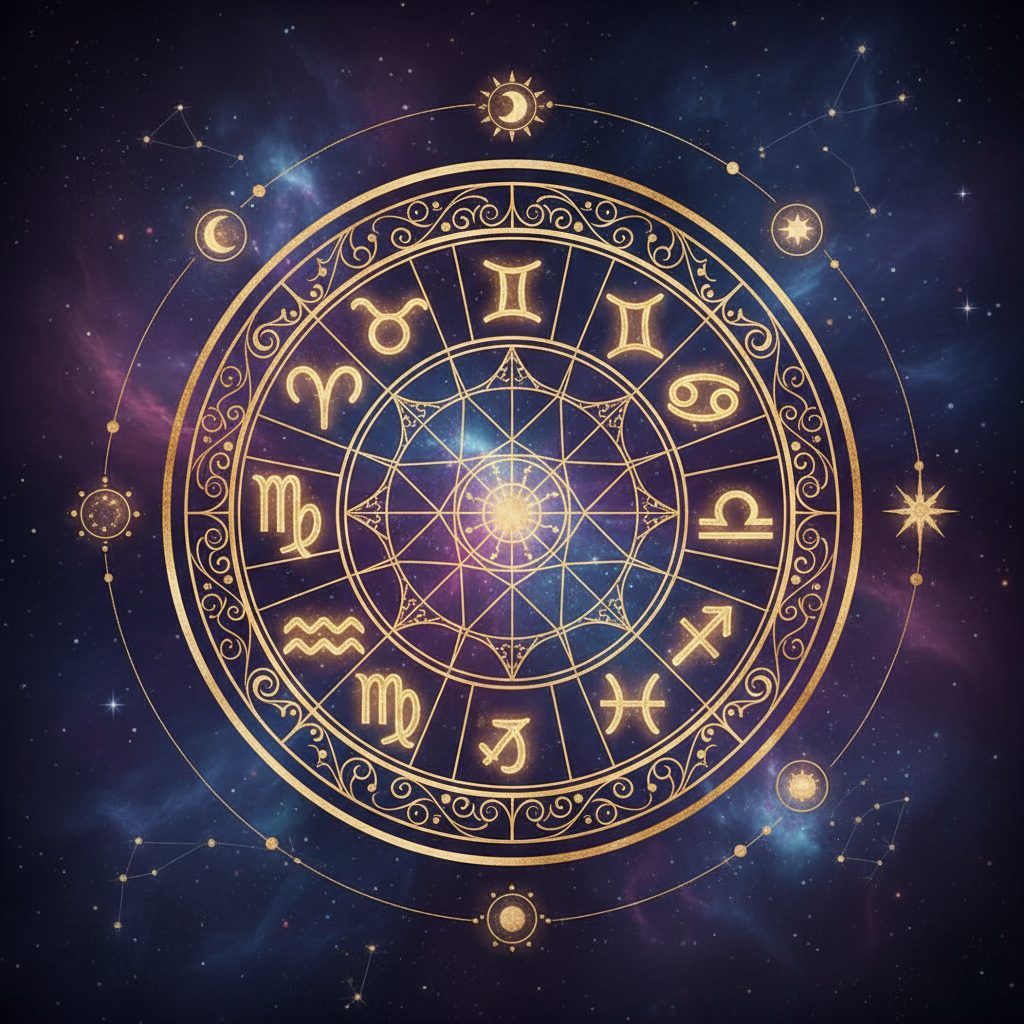
Transits are the current positions of planets in the sky, compared to the positions they held at the moment of your birth (your birth chart). When a transiting planet forms an aspect — conjunction, opposition, square, trine, or sextile — with a point in your natal chart, it activates that energy in your life.
In a generic weekly horoscope (the kind you find on websites and magazines), the analysis is done for the sun sign — meaning your natal Sun is used as the reference point. The astrologer checks which planets are transiting through which houses and what aspects they form during that week.
The most relevant transits for a weekly reading include:
- Moon — changes signs every ~2.5 days, colours the emotional tone
- Mercury — communication, contracts, short trips
- Venus — relationships, money, pleasure
- Mars — action, energy, conflict
- Aspects between slower planets — when Jupiter squares Saturn, for instance, the effect lasts weeks, but there’s one week when it’s exact
Sun Sign, Rising Sign, or Moon — Which Should You Read?
This is possibly the most common question about horoscopes. And the answer might surprise you: ideally, you should read all three.
Sun sign
Your “normal” sign — the one everyone knows. It represents your essence, your ego, your conscious identity. When you read the weekly horoscope for your sun sign, you’re seeing general life trends, goals, and direction.
Rising sign (Ascendant)
The rising sign is the sign that was coming up over the horizon at the exact moment of your birth. Many astrologers consider it even more important than the sun sign for transit readings, because it defines the astrological houses in your chart. When you read for the ascendant, the house distribution matches your actual experience more closely.
If you don’t know your rising sign, you’ll need your exact birth time. There are plenty of free sites where you can calculate your birth chart — but that’s a topic for another article.
Moon sign
The Moon in your natal chart reveals your deep emotions, instincts, and security needs. Reading the weekly horoscope for your moon sign gives you clues about how you’ll feel emotionally during the week — which is especially useful if you’re a highly intuitive or sensitive person.
My suggestion: read for the ascendant first (the most precise experience), then the sun sign (the general view), and finally the Moon (the emotional layer). Over time, you’ll notice which one resonates most.
The Days of the Week and Their Ruling Planets
Did you know that each day of the week is ruled by a planet? This is an ancient astrological tradition that can transform how you plan your week. And no, it’s not superstition — it’s a practical organisational tool.
- Monday — Moon: A day for introspection, tending to emotions, domestic matters. Good for planning the week calmly, avoiding impulsive decisions.
- Tuesday — Mars: Action energy. Ideal for facing challenges, working out, launching projects that require courage. Watch out for conflicts — Mars energy can be aggressive.
- Wednesday — Mercury: Communication and intellect. Perfect for meetings, writing, studying, negotiating. Mercury loves quick movement.
- Thursday — Jupiter: Expansion and luck. The best day to think big, make long-term plans, invest. Jupiter favours generosity and optimism.
- Friday — Venus: Love, beauty, pleasure. Ideal for dates, shopping, self-care, artistic activities. Venus wants you to enjoy life.
- Saturday — Saturn: Discipline and structure. It might feel heavy, but it’s perfect for organising, cleaning, resolving pending matters. Saturn rewards effort.
- Sunday — Sun: Vitality and identity. A day to recharge, connect with yourself, do things that bring genuine joy.
When you cross-reference this information with your weekly horoscope, you can fine-tune your planning even further. If the horoscope says Tuesday favours action and Tuesday is Mars’s day — the energy is doubly in your favour.
How to Complement Your Horoscope with Tarot and Numerology
Your weekly horoscope doesn’t need to exist in isolation. In fact, it works better when combined with other self-knowledge tools. Two of the most powerful are tarot and numerology.
Tarot + Weekly horoscope
A weekly tarot spread — for example, one card for each day or a three-card pull (beginning, middle, and end of week) — complements the horoscope beautifully. While astrology shows you the cosmic energies at play, tarot speaks directly to your unconscious.
Say the weekly horoscope indicates tension in the area of relationships (Venus squaring Pluto). A tarot reading might reveal exactly where the knot is — perhaps the Tower suggesting something needs to crumble to be rebuilt, or the Two of Cups reminding you that the solution lies in dialogue.
If you want to start with tarot, we have a complete beginner’s guide that will help you take your first steps.
Numerology + Weekly horoscope
Numerology adds another layer of information. Every week of the year carries a specific numerical vibration, calculated from the date. And each person has their own personal year and personal month in progress.
When the week’s numerical vibration aligns with the astrological energy, things flow. When there’s conflict — for instance, a week vibrating at 4 (stability, routine) during an activated Uranus transit (change, disruption) — you know you’ll feel tension between the desire for security and the need for change.
This kind of cross-reading isn’t complicated, but it takes practice. The reward is a much richer, more nuanced understanding of what each week holds.
Common Mistakes in Weekly Horoscope Interpretation
After years of following horoscopes — and talking to people who do the same — there are mistakes I see repeated again and again. Here are the most common ones, so you can avoid them.
1. Taking everything literally
The weekly horoscope isn’t a prophecy. It’s a reading of energetic trends. When it says “possibility of conflict in relationships,” it doesn’t mean you’ll have an argument. It means the energy is tense in that area — what you do with that information is up to you.
2. Only reading your sun sign
We’ve already covered this. If you only read for your sun sign, you’re catching maybe 30-40% of the picture. The ascendant and Moon complete the image.
3. Ignoring your natal chart’s context
A generic horoscope is written for millions of people. A Saturn transit can be devastating for someone with a vulnerable Sun placement and barely noticeable for another person. The weekly horoscope gives you clues, but the real detail lives in your individual chart.
4. Consulting too many astrologers
Every astrologer has their own style and priorities. If you read five different horoscopes, you’ll end up confused. Pick one or two astrologers you trust and stick with them.
5. Using the horoscope as an excuse
“I can’t do anything, Mercury is retrograde.” No. Astrology is a tool for awareness, not a crutch for inaction. Mercury retrograde asks for extra attention, not for you to hide under the bed.
6. Forgetting that free will exists
The stars incline, they don’t compel — this ancient maxim remains the most important one. The horoscope shows potentials, not fixed destinies. You always decide what to do with the available energy.
How to Use Your Weekly Horoscope Practically
Let’s get to the practical part: how do you turn the weekly horoscope into a useful tool in your daily life? Here’s a method that works.
Step 1 — Read on Sunday or Monday morning
Most weekly horoscopes are published on Sunday. Set aside 10-15 minutes to read calmly — preferably with a coffee, no rush. Read for the ascendant, sun sign, and moon sign.
Step 2 — Identify the week’s themes
Don’t try to memorise every detail. Instead, extract the two or three main themes. Is this week about communication? Finances? Relationships? Health? Write them down.
Step 3 — Mark the key days
If the horoscope indicates that Wednesday brings an opportunity or Friday carries tension, note it in your calendar. Treat these as attention reminders, not sentences.
Step 4 — Cross-reference with the day’s ruling planet
Use the ruling planet table I shared above. If the horoscope mentions strong Mars energy and the day in question is Tuesday (Mars’s day), the energy is amplified.
Step 5 — Complement with a tarot pull
If you practise tarot, draw one or three cards for the week. Compare the messages — there are usually surprising convergences.
Step 6 — Review at the end of the week
This step is gold. On the following Sunday, before reading the next horoscope, look back. What proved accurate? What didn’t apply? This review exercise is what transforms you from a passive reader into an active interpreter.
A Word About Online Weekly Horoscopes
The internet is full of weekly horoscopes. Some are excellent, written by skilled astrologers with years of practice. Others are generic to the point of being useless — those vague sentences that apply to anyone at any time.
How do you tell the good from the bad? Pay attention to a few signs:
- Does the astrologer mention specific transits (planets, degrees, aspects)?
- Are the predictions concrete enough to be verifiable?
- Is there a real distinction between different signs, or does it look like they swapped a few words between each one?
- Is the tone balanced — neither catastrophist nor irresponsibly optimistic?
Here at Caminho Numérico, we publish daily predictions that you can use as a complement to your weekly horoscope. The idea is to give you concrete tools, not empty promises.
The Weekly Horoscope as a Self-Knowledge Ritual
Perhaps the most underrated benefit of the weekly horoscope is this: it forces you to stop and reflect. In a life full of noise and rush, setting aside 15 minutes each week to think about the themes ahead is, in itself, a powerful act of self-awareness.
You don’t need to believe that planets control your life to benefit from this practice. Just treat the horoscope as a starting point for reflection — a symbolic mirror that invites you to look inward before looking outward.
And when combined with tarot, numerology, and a basic understanding of your birth chart, the weekly horoscope becomes one of the most complete personal guidance tools you can have — without spending a penny.
Try it for a month. Read your weekly horoscope carefully, apply the six-step method I shared, and review the results. I think you’ll surprise yourself with what you discover — not about the future, but about you.
Caminho Numérico
Keep exploring numerology
Get new articles on numerology, tarot and astrology to explore the ideas in this article further.