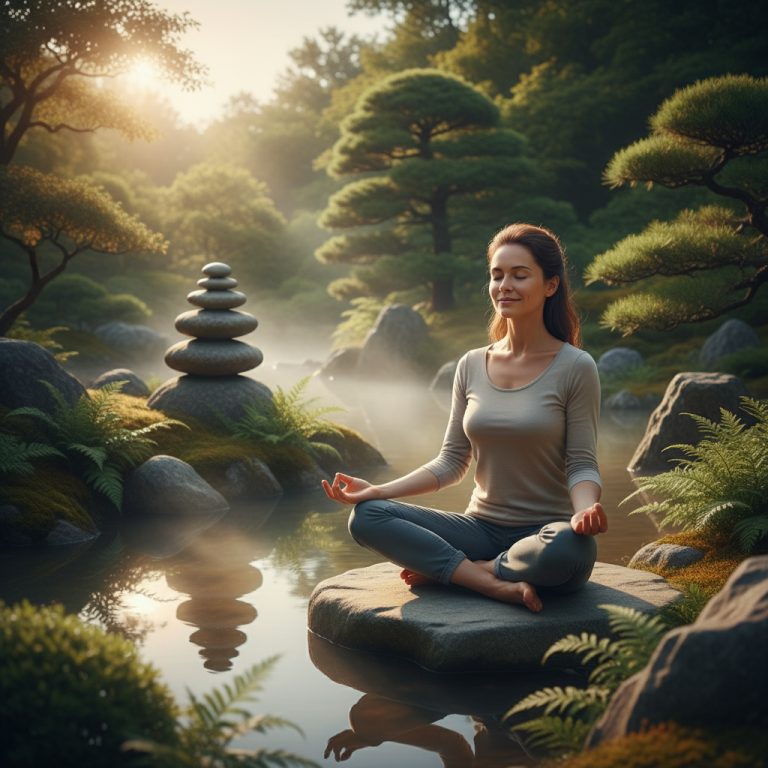
A few years ago, if someone had told me I’d spend 20 minutes a day sitting in silence with my eyes closed, I would have laughed. Meditation was something monks did on mountaintops or people with too much free time — at least, that’s what I believed. Today, meditation is as much a part of my routine as brushing my teeth. And the truth is, it has fundamentally changed how I relate to myself and everything around me.
If you’ve found your way to this article, chances are you already feel that pull of curiosity. Maybe you’re going through a particularly hectic period, or you simply want to understand what this whole meditation thing is about and whether it actually works. Stick around — I’m going to share what I’ve learned, without unnecessary mysticism and without exaggerated promises.
What Meditation Really Is
Forget the stereotypical image of someone in a perfect lotus position, surrounded by candles and incense. At its core, meditation is attention training. It’s the practice of consciously directing your mind toward a point of focus — it could be your breath, a bodily sensation, a sound, or simply the act of watching your thoughts without getting swept away by them.
Think of it this way: throughout the day, your mind jumps from thought to thought like a monkey swinging from branch to branch. Work worries, the grocery list, that conversation that went sideways last week, weekend plans — all tangled together, all at once. Meditation is the moment you ask the monkey to sit down. It won’t obey right away, of course. But with practice, the periods of stillness grow longer.
What most people don’t realize is that meditating doesn’t mean “thinking about nothing.” That’s probably the biggest misconception about the practice. Thoughts will show up — always. What changes is your relationship with them. Instead of being dragged along by the current, you learn to stand on the riverbank and watch the water flow by.
What Science Says About the Benefits
I’m not going to ask you to take anything on blind faith. The good news is that science has been investigating meditation seriously over the past few decades, though much of that research is still preliminary.
Researchers at Harvard University found that just eight weeks of regular mindfulness practice produce measurable changes in brain structure — specifically, an increase in gray matter density in the hippocampus (linked to memory and learning) and a reduction in the amygdala (associated with stress and anxiety). The US NCCIH cautions, though, that these brain-imaging findings are difficult to interpret and their practical implications are not yet clear.
According to the NHS, studies show mindfulness can help with stress, anxiety and depression; the US NCCIH cautions, though, that much of the research so far has been preliminary or not scientifically rigorous. It does not replace treatment for depression or anxiety — if you're struggling, talk to your doctor.
The benefits extend well beyond mental health: improved concentration, sharper decision-making, more balanced emotional regulation, and a greater sense of connection with others. Athletes, CEOs, and therapists alike have integrated meditation into their routines — not as a trend, but as a proven tool for peak performance and well-being.
The Different Paths: Types of Meditation
One of the things that confused me early on was the sheer number of meditation types out there. It felt like an endless menu. Over time, I realized that each technique is simply a different path to the same destination: a calmer mind and a more conscious presence. Here are the most well-known approaches to help you choose where to start.
Mindfulness (Present-Moment Awareness)
The most popular technique in the West and the one backed by the most research. The principle is simple: pay attention to the present moment, without judgment. You can focus on your breathing, on bodily sensations, or on the sounds around you. It works particularly well for people who live trapped in worries about the future or ruminations about the past.
Transcendental Meditation (TM)
This technique uses a personal mantra — a word or sound — that you repeat silently during practice, serving as a vehicle to deeper states of consciousness. Traditionally, it’s learned from a certified teacher, but you can experiment informally by choosing a word that resonates with you (like “peace” or “Om”) and using it as an anchor.
Guided Meditation
If the idea of sitting in silence feels intimidating, this might be your gateway. You listen to someone’s voice guiding you through the practice — a visualization, a body scan, or instructions on where to direct your attention. Apps like Insight Timer, Headspace, or Calm offer thousands of free options, making it incredibly accessible for beginners.
Vipassana
One of the oldest forms of Buddhist meditation, with more than 2,500 years of history. The word means “seeing things as they really are,” and the practice is based on deep observation of bodily sensations. The most well-known way to learn is through 10-day silent retreats in the tradition of S.N. Goenka — intense, but frequently described as life-changing.
Zen Meditation (Zazen)
Originating from Japanese Zen Buddhism, it’s as stripped-down as meditation gets. You sit, maintain an upright posture, and focus on your breath. No visualizations, no mantras — just you and your breathing. If you’re drawn to minimalist approaches, Zazen might be exactly what you’re looking for.
How to Start from Scratch (Without Overcomplicating It)
Here’s the practical part. If you’ve never meditated before, this is a starting point I used myself, and it works for most people.
Start by choosing a time of day when you can be at ease. It doesn’t have to be first thing in the morning — if you can barely open your eyes before coffee, meditating at 6:30 a.m. isn’t going to work. Find your moment.
Find a quiet spot — your bedroom works perfectly. Sit on a chair or on the floor with a cushion, keep your back reasonably straight, and close your eyes.
Notice your breathing. Feel the air entering, your lungs expanding, and the reverse movement as you exhale. Don’t try to control anything — just observe. When your mind wanders (and it will), gently notice it and come back to the breath. Every time you catch yourself drifting and return, you’re doing a mental “rep” — like a push-up for the brain.
Start with five minutes. After a week or two, increase to 10. Then 15 or 20, at your own pace. The most important thing isn’t the duration — it’s the consistency.
Common Mistakes Beginners Make
Over time, I’ve seen (and made) a few repeated mistakes that are worth addressing.
The first and most common is thinking you’re doing it wrong because your mind won’t stop. Let me say this clearly: your mind will never stop completely. Having thoughts during meditation isn’t failure — it’s being human. The exercise is precisely in the act of noticing you’ve drifted and coming back. If you did that 50 times in a 10-minute session, you did 50 reps of attention training. That’s success, not failure.
Another classic mistake is expecting instant results. Meditation isn’t aspirin — you won’t sit once and feel enlightened. The effects accumulate subtly over weeks and months. Often, the people around you notice first: “You seem calmer,” “You don’t react as impulsively anymore.” The transformation happens beneath the surface before it becomes visible.
Some people also give up because they think they need perfect conditions — absolute silence, a special cushion, the right playlist. None of that is necessary. You can meditate on the bus or in the five minutes before a meeting.
Finally, be careful not to turn meditation into a rigid obligation. If the practice becomes a source of stress, you’re defeating the purpose. Missed a day? Pick it back up tomorrow, guilt-free.
Meditation as a Tool for Self-Discovery
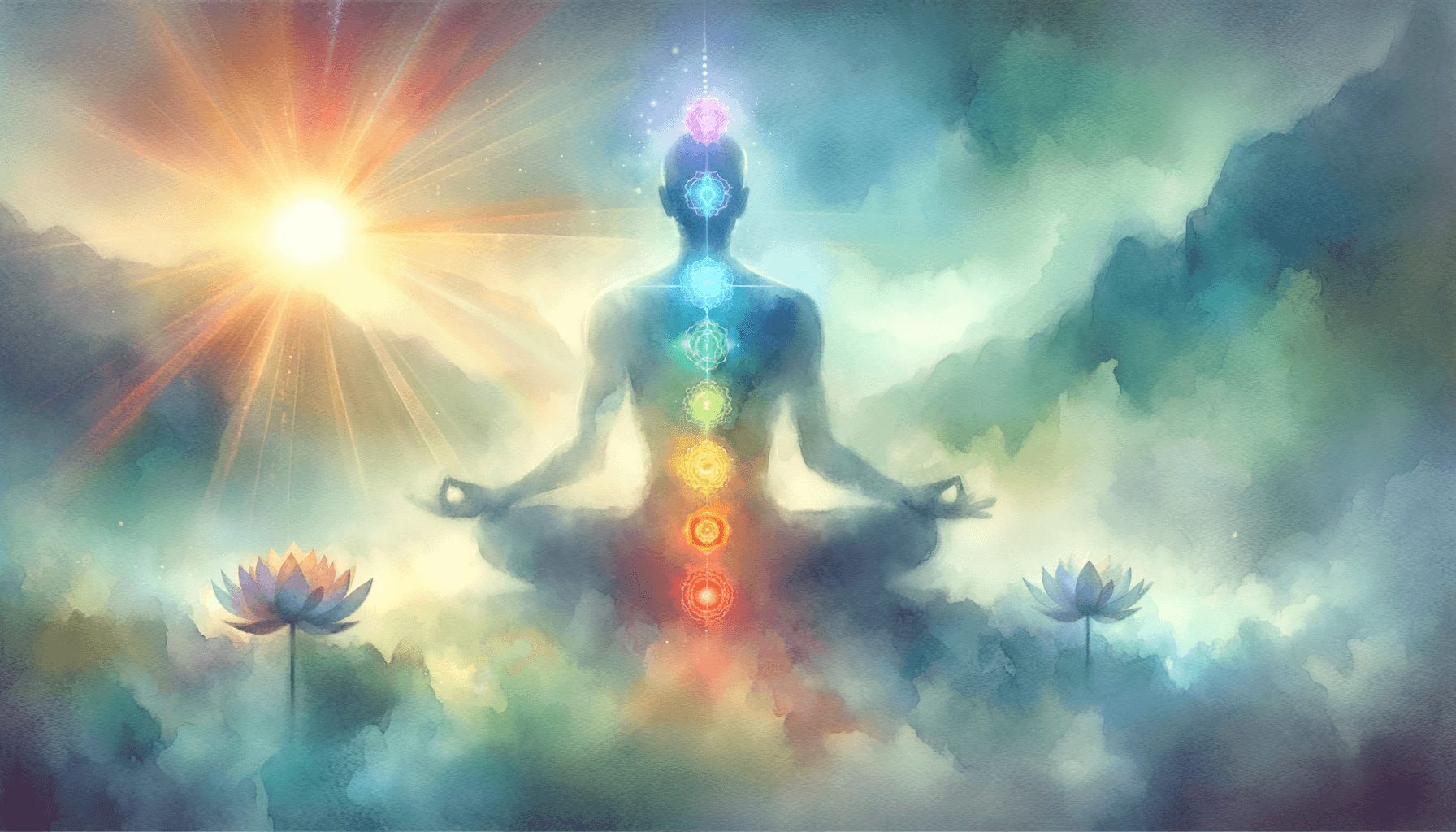
There’s a dimension to meditation that goes far beyond “reducing stress” or “improving focus,” and it’s perhaps the most profound one: the ability to truly know yourself.
When you sit in silence, without your phone, without distractions, without anything to entertain you, you’re left alone with your mind. And what you find in there can be surprising. Thought patterns you didn’t know you had, fears hidden beneath layers of constant busyness, genuine desires you’d muffled with automatic routines.
Meditation acts as an internal mirror. It doesn’t change what you see — it shows you what’s already there. And that knowledge is transformative. When you realize that your recurring irritation in traffic is actually unprocessed anxiety, or that your difficulty saying “no” stems from a pattern learned in childhood, you begin to have choice. You stop reacting automatically and start responding consciously.
In spiritual traditions, this process goes by different names — awakening, enlightenment, expansion of consciousness. Regardless of the language you prefer, the mechanism is the same: by observing your mind without identifying with every thought, you create space between who you are and what you think. And in that space lives an extraordinary freedom.
The connection between meditation and practices like numerology, tarot, or astrology runs precisely through this idea. All of these tools are, at their core, paths to self-knowledge — different ways of looking inward. Meditation offers a direct route, without intermediaries, without symbols: just you and your consciousness.
Practical Tips to Stay Consistent
The hardest part of meditation isn’t learning the technique — it’s maintaining the practice over time. Here are some strategies that work well.
Anchor your meditation to a habit you already have. If you drink coffee every morning, meditate right after. If you change clothes when you get home from work, meditate before turning on the TV. This kind of “habit stacking” makes building a stable routine much easier.
Use a simple timer instead of checking the clock. Most phones have a basic timer, or you can use an app like Insight Timer that plays a gentle bell when time is up.
Try different techniques during your first few weeks. Don’t marry an approach just because it was the first one you found. Test mindfulness, guided meditation, mantra meditation — discover what resonates with you. There’s no universally “best” technique; there’s the technique that works for you.
As for location, if you can, try to meditate in the same spot each time. The brain creates associations with physical spaces, and over time, the simple act of sitting in that specific corner will begin to induce a state of calm.
And remember: the days when you least feel like meditating are often the days you need it most. The resistance you feel is, more often than not, a signal that something beneath the surface is asking for your attention.
Frequently Asked Questions About Meditation
How long should I meditate each day?
If you’re just starting out, 5 to 10 minutes is more than enough. With practice, you can increase to 15 or 20 minutes. Studies suggest that 20-minute daily sessions produce significant benefits, but any amount of time is better than none.
Can I meditate lying down?
You can, but there’s a real risk of falling asleep — especially if you meditate at the end of the day. A seated position maintains a balance between comfort and alertness. That said, if you have physical limitations that make sitting uncomfortable, lying down is perfectly valid.
Does meditation have any contraindications?
For the vast majority of people, meditation is safe. However, individuals with serious psychiatric conditions (such as psychosis or severe PTSD) should consult a healthcare professional before starting an intensive practice. Short, guided meditations are generally safe for nearly everyone.
How long until I feel the effects?
Some people report subtle benefits from the very first sessions — a sense of calm or greater clarity. The deeper, lasting effects, such as improved emotional regulation and a calmer response to stress, tend to emerge between 4 and 8 weeks of regular practice.
The Invitation
Meditation isn’t something you fully understand through reading. You can read a thousand articles about swimming, but you’ll only learn when you jump into the water. My invitation is simple: try it. Today. Five minutes. Sit down, close your eyes, breathe. Observe what happens.
You don’t need to be spiritual, you don’t need to believe in anything in particular, you don’t need to buy anything. All you need is a body, a breath, and a little bit of curiosity.
Your mind will resist. It will tell you that you’re wasting time, that you have more important things to do, that this is silly. Notice that voice and smile at it. Then, return to the breath.
That’s how it begins. And if you stay true to the practice, you may discover something no book can give you: a place of silence within you that was always there, waiting to be found.
Caminho Numérico
Keep exploring numerology
Get new articles on numerology, tarot and astrology to explore the ideas in this article further.